ASK THE PALENGKE
GreenCart Collective · Retail
Challenge
Cultural relevance — Urban Southeast Asian millennials and Gen Z consumers (ages 22-38) who shop frequently at convenience stores and supermarkets, hold progressive values around sustainability, but feel paralyzed by greenwashing claims and the impossibility of verifying ethical sourcing in fast-moving retail environments
Insight
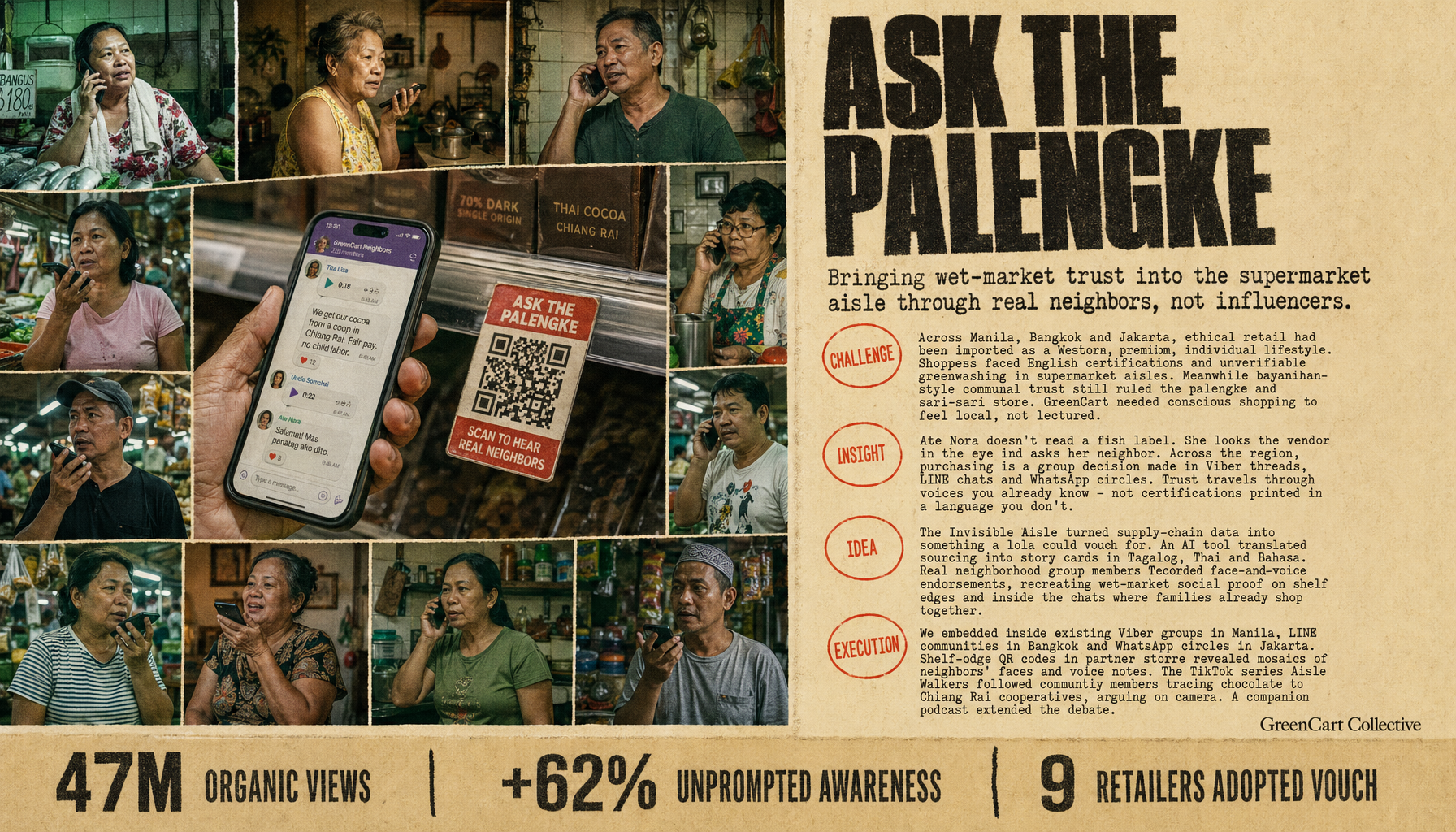
In Southeast Asia, the cultural practice of 'bayanihan' (communal helping) and similar collective-care traditions across the Philippines, Indonesia, and Thailand means people deeply trust recommendations that come from within their own communities — yet ethical shopping has been framed as an individual, Western, premium lifestyle choice, completely disconnected from the communal decision-making that actually drives purchasing behavior in the region's wet markets, sari-sari stores, and neighborhood groups.
Idea
Turn the invisible labor behind ethical products into community-verified stories by building an AI-powered social layer where real neighborhood groups — not influencers — collectively 'vouch' for products, recreating the trust dynamics of traditional market haggling and communal recommendation in the digital retail space.
Execution
GreenCart Collective partnered with existing neighborhood Viber and LINE groups across Manila, Bangkok, and Jakarta. An AI tool scanned product supply chains and translated complex sourcing data into simple, shareable story cards in local languages and dialects. Community members could then 'vouch' for products — adding their face and a short voice note explaining why they trusted the item — mimicking the social proof of a trusted vendor at a wet market. In-store, QR codes on shelf edges revealed not corporate sustainability claims but a mosaic of real neighbors' faces and voice endorsements. On TikTok, the campaign launched with a series called 'Aisle Walkers' — short documentary-style videos following real community group members as they investigated supply chains together, debating and disagreeing on camera, modeling the messy, authentic process of collective trust-building rather than polished advocacy.