WHAT YOUR BANK ATE
FairPath Alliance · Financial Services
Challenge
Behaviour change — Millennial renters and gig-economy workers aged 22-34, predominantly in urban centers, who distrust traditional banking institutions but passively accept predatory financial products like payday loans and overdraft penalties because they view them as the only options available to people without generational wealth.
Insight
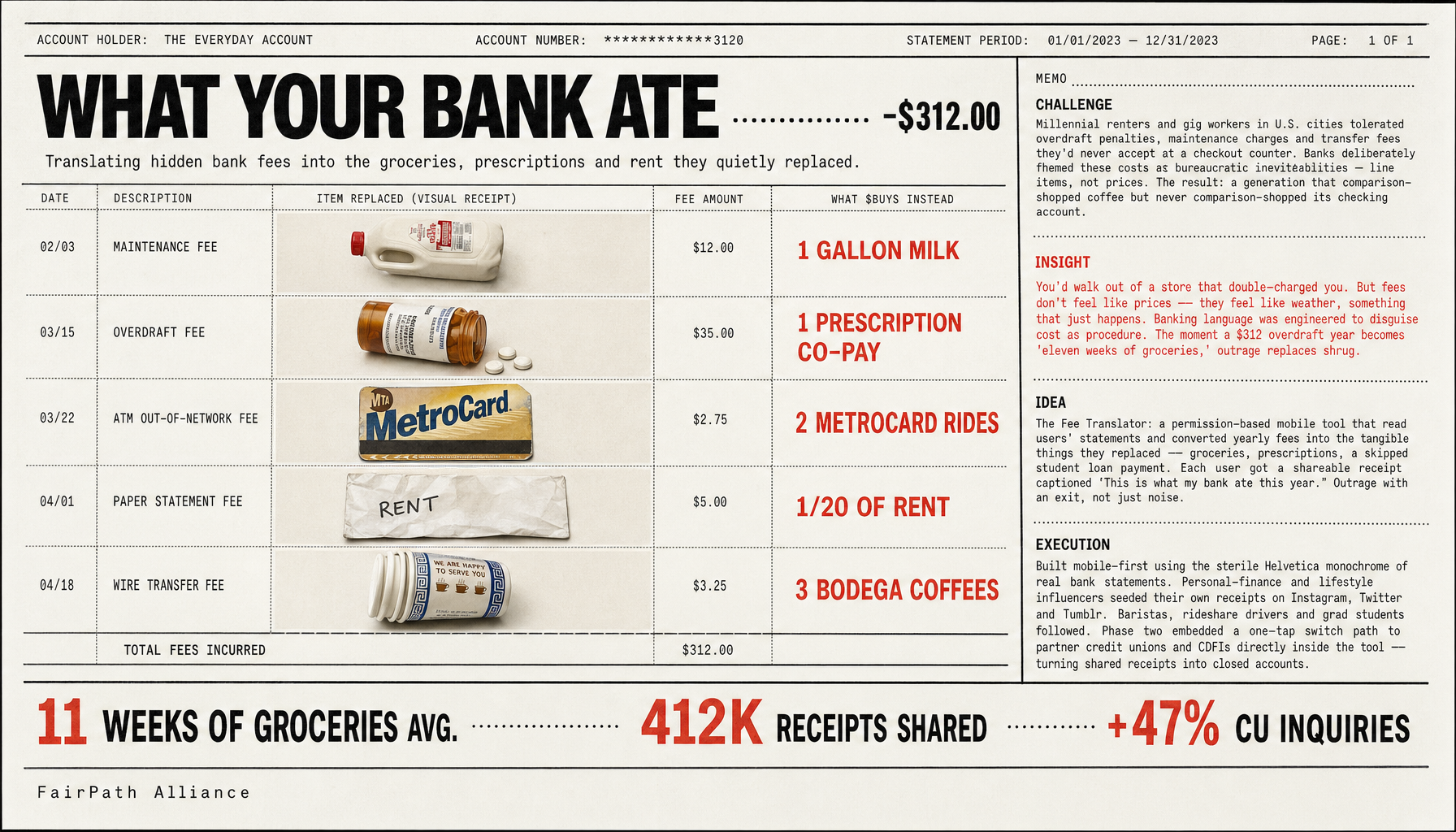
Young Americans who would never tolerate being visibly overcharged at a grocery store routinely accept hidden financial fees because the language of banking is deliberately designed to feel like a bureaucratic inevitability rather than a choice — fees don't feel like prices, so people never comparison-shop them.
Idea
Force people to confront the true cost of their financial fees by translating them into the tangible everyday purchases they silently replace — turning an invisible line item into a visible sacrifice posted, shared, and debated across social platforms.
Execution
FairPath built a mobile-first tool called 'The Fee Translator' that connected to users' bank statements (with permission) and automatically converted their annual fees and penalties into an itemized list of what those dollars could have bought — weeks of groceries, months of streaming, student loan payments. Users were prompted to share their personalized 'fee receipt' as a social post with the tagline 'This is what my bank ate this year.' Influencers in personal finance and lifestyle spaces seeded the tool by posting their own shocking receipts. The visual language mimicked the sterile aesthetic of actual bank statements — clean Helvetica, monochrome palette — but the contents were jarring and personal. A second phase partnered with credit unions and community development financial institutions to offer a direct 'switch path' embedded within the tool itself, turning outrage into immediate action.